17 vs 21 Key Kalimba: The Difference and How to Tune Each
When you're choosing a kalimba or just trying to understand your instrument, the first question is how many tines it has. The industry standard is 17 keys, but extended models with 21 keys are growing more popular. The difference isn't just the count: the capabilities, the sound, and the tuning nuances all change.
The good news — the Kalimbik tuner supports both. Let's look at how they differ and how to tune each one without mistakes.
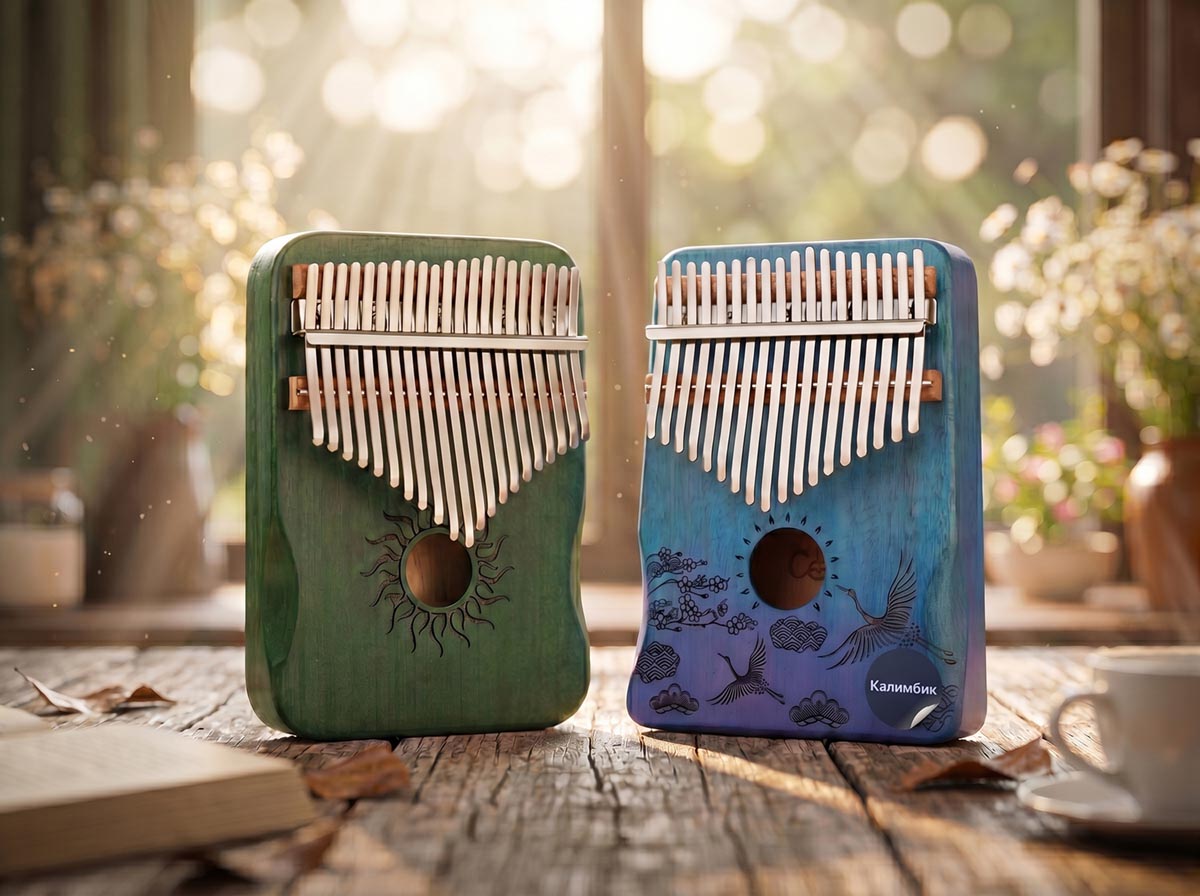
The Fundamental Difference
A 17-key kalimba has a range from C4 to E6 (from C in the fourth octave to E in the sixth). That's a solid two-plus octaves — more than enough for a huge number of melodies. The 17-key kalimba is considered the ideal choice for beginners: the tines are spaced out, easy to tell apart and easy to tune.
A 21-key kalimba adds 4 low bass notes, located in the center of the instrument — usually F3, G3, A3, B3. These extra basses give a deeper, fuller, richer sound, expanding the possibilities for accompaniment and complex arrangements.
In short: 17 keys is the baseline that's enough for most people. 21 keys is for those who need an extended lower register and more room to create.
What Should a Beginner Choose
If you're just starting out, 17 keys is almost always the right choice:
- The tines are spaced more freely, making it easier not to catch a neighbor.
- Most tabs and learning materials are written for the 17-key layout.
- The instrument is lighter and more compact.
- It's simpler to tune — fewer tines and no "tricky" basses.
Consider 21 keys if you already know you're missing the lows, or if the specific melodies you want to play require an extended range. Moving from 17 to 21 after mastering the basics is a perfectly normal path.
How to Tune a 17-Key Kalimba
This is the standard process:
- On the tuner homepage, make sure the 17 mode is selected (the button in the layout panel).
- Pluck the tines one at a time and adjust them by the tuner's prompts until the indicator turns green.
- Work from the center outward so you don't catch tines you've already tuned.
A detailed breakdown of each step is in our tuning guide.
Tuning Nuances of a 21-Key Kalimba
The 21-key model is a bit more involved, and this is exactly where beginners most often get lost. Let's go over the key points.
1. Switch the Tuner Mode First
On the homepage, be sure to press the "21" button in the "Kalimba Layout" panel. The visual diagram will change — you'll see the extra wide tines in the center. If you don't do this, the tuner will expect a 17-key layout and show the wrong notes for the basses.
2. Watch Out for the Long Sustain of the Basses
The low notes (F3, G3, and the other bass tines) ring for a very long time — they have a powerful sustain, meaning the sound fades slowly, like an echo. This creates a tuning problem: you pluck a tine a second time, but the tuner is still "hearing" the tail of the previous sound and shows the wrong pitch.
The fix: before each new pluck, mute the bass tine with your finger, let it fall completely silent, and only then pluck again. That way the tuner always analyzes a fresh sound rather than an old echo.
3. The Tines Are Spaced Closer Together
On 21-key models there are more tines but the body is the same size — so they sit closer together. This makes it easy to miss and catch a neighboring tine instead of the one you wanted.
The tuner's visual diagram helps here. For example, you meant to play C4, but the neighboring A3 lit up on screen — that's a sign you either missed, or the neighbor is resonating more strongly. Mute the extra sounds, aim more precisely, and try again.
Comparison in a Nutshell
17 keys — more compact, easier to learn and tune, ideal for beginners, compatible with most tabs. Range C4–E6.
21 keys — richer and deeper thanks to the basses, more room for complex melodies, but requires more care when tuning (especially the basses) and more attention to technique because of the tight layout.
Frequently Asked Questions
Can I play 17-key tabs on a 21-key kalimba? Yes. The upper 17 tines of a 21-key kalimba are laid out the same as on a standard one — just with 4 basses added in the center. Any 17-key tabs play without changes, and you use the basses as you wish.
Is a 21-key kalimba harder to tune? Not by much. The main challenges are the basses with their long sustain (which you need to mute before plucking again) and the tight layout. Otherwise the process is the same.
Should I buy 21 keys right away so I don't have to upgrade later? Not necessarily. Many people play 17 keys for years and find it plenty. Buy 21 only if you're sure you need the extended bass. Otherwise the extra tines will just sit unused.
Why are the bass notes in the center and not on the side? That's a feature of the kalimba layout: notes alternate from the center toward the edges. The lowest tines are the longest, and it makes sense to place them in the center where there's more room. The extra basses of the 21-key model are built right in there.
Are there kalimbas with other numbers of notes? Yes — you'll find models with 8, 10, 15, and even 34 notes (double-row). But 17 and 21 are the most common. The Kalimbik tuner is designed specifically for these two.
Whatever instrument you have, start with the right mode on the Kalimbik homepage — and tuning will go precisely and without confusion.